Masonry design
How brick and block walls carry load, when padstones and piers are really needed, and what existing walls can take.
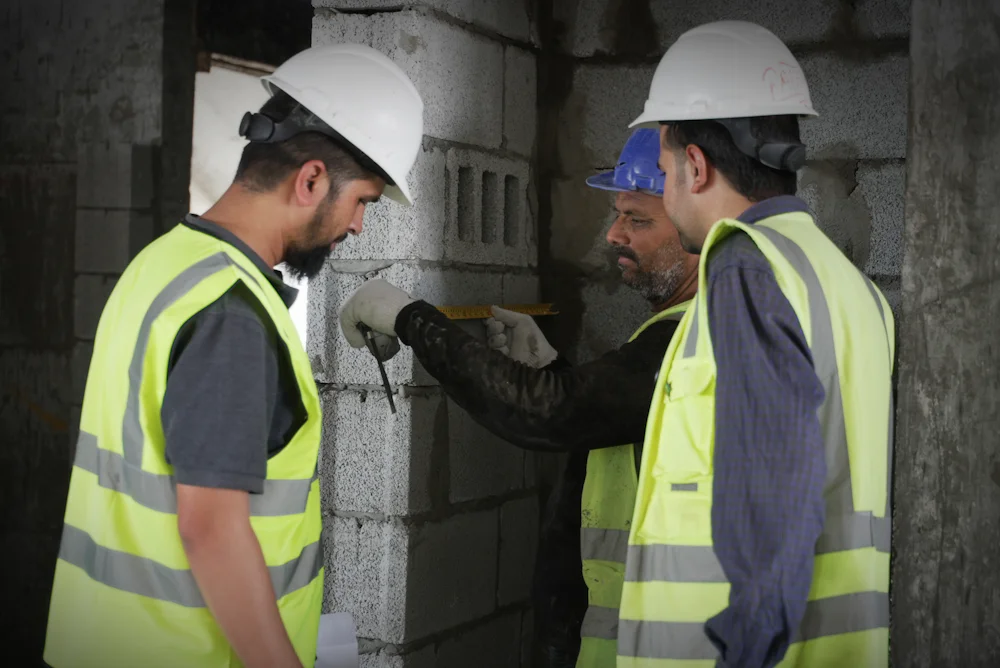
About this topic
Masonry carries most of the load in a UK house, yet it is the element builders are least often shown how to check. This topic covers what a wall can carry, what concentrated loads do to it, and how openings change it.
How it’s sized: Block strength, wall thickness, slenderness and restraint set the capacity. Concentrated loads at beam ends usually decide whether a padstone is needed.
What you’ll learn at each level
- How brick and block walls carry load; cavity walls and wall ties
- Lateral restraint from floors and roofs, and why it matters
- Lintels and openings, and why openings near corners need care
- Reading wall, pier and padstone details
- Wall capacity: block strength, mortar, thickness and slenderness
- Concentrated loads at beam ends: when a padstone is needed and how it is sized
- Piers and wall lengths around openings
- Wind on gable walls, and restraint straps
- Removing chimney breasts and supporting what is above
- Altering existing walls of unknown construction and strength
- Movement joints, cracking and the stability of extensions
- Alternatives to piers and steel posts
Draft outline. The full syllabus is sent with your course details.
Questions that save you money
The kind of question you’ll be able to put to your engineer, and understand the answer to.
- Is a padstone really needed here, or can the blockwork take the bearing?
- What wall length has been assumed for this pier, and does it need to be that wide?
- Can the existing wall be reused rather than rebuilt?
Who it’s for
One avoided mistake pays for the course.
Registering isn’t a commitment. You’ll get outlines, dates and pricing in writing, and you’ll be first to hear when new topics open.
Register your interest